

Saving money is an important habit, but simply saving is not enough to build long-term wealth. Investing your savings wisely helps your money grow, protects it from inflation, and supports future financial goals such as education, buying a home, or retirement and also healthy well being . Knowing how and where to invest depends on your income, goals, time horizon, and risk tolerance.
1.What Is a saving of your money ?
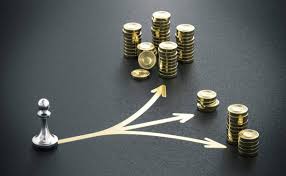
The acquisition of an asset, resource, or property with the primary goal of earning money or increasing in value over time is referred to as an investment. Rather than focusing on immediate consumption, investment involves committing resources today with the expectation of future benefits. These resources may include money, time, effort, or expertise, all of which are deployed strategically to create long-term value and financial growth. The gradual increase in an asset’s value as a result of market demand, economic expansion, innovation, or enhanced performance is one of the primary purposes of investment. Businesses, stocks, bonds, personal skills, and other assets can appreciate over time, providing investors with capital gains in addition to their regular income. Investments that generate income, such as rental properties or shares that pay dividends, have the potential to appreciate over time while also providing periodic returns. Planning and making decisions in the face of uncertainty are inherently involved in investing. Because it is impossible to accurately predict what will happen in the future, every investment carries some level of risk. However, a long-term perspective, informed analysis, and diversification can assist in risk management and increase the likelihood of achieving desired returns. Because meaningful gains typically materialize over a longer period of time rather than immediately, successful investing frequently necessitates patience and discipline. Human capital can also be the subject of investments, in addition to financial assets. Investments in health, health, education, professional development, and skill development are potent ways to improve one’s earning potential, productivity, and quality of life, even if they don’t pay off right away. In a similar vein, putting in time and effort into developing innovative concepts, businesses, or relationships can yield both tangible and intangible benefits over time. Investment, in essence, is a process that looks ahead, balancing present loss with future gain. Individuals and organizations aim to achieve long-term objectives, generate wealth, and ensure financial stability by judiciously allocating resources today. Investment is a fundamental concept in both personal finance and broader economic systems because it plays a crucial role in economic development, wealth creation, and sustained growth.
2.Where to save your money for future ?

Equities or shares Stocks, also known as equities, represent partial ownership in a public or private company. When a person buys stock, they become a shareholder and may benefit in two primary ways. First, investors may be eligible to receive dividends, which are shares of the company’s net profits. Second, stocks can appreciate in value over time, allowing investors to sell them at a higher price and earn capital gains. Common stocks, which typically provide voting rights and variable dividends, and preferred stocks, which typically provide fixed dividends with priority over common shareholders, are the two main types of stocks. Fixed-income securities or bonds Bonds are debt instruments that require an initial investment and provide regular interest payments, known as coupon payments, over a fixed period. The investor receives the initial principal amount invested at maturity. Governments and corporations commonly issue bonds as a means of raising capital. Bonds are generally considered lower-risk investments compared to stocks, making them attractive to conservative investors seeking stable income.
Mutual Funds and Index Funds A diversified investment portfolio is created by pooling money from multiple investors into mutual funds and index funds. Mutual funds are actively managed by professionals who aim to outperform a specific benchmark. Index funds, on the other hand, are designed to replicate the performance of a specific market index and are passively managed. These funds offer diversification, professional management, and accessibility to a wide range of assets through a single investment.
Real Estate
Acquiring tangible assets like land, residential homes, office buildings, or commercial spaces are all examples of real estate investments. Through rental income, property appreciation, or development projects, investors can earn returns. The tangible value of real estate can protect against inflation. Commodities
Commodities include raw materials such as agricultural products, energy resources, and metals. Investors can own physical commodities like gold or invest through financial instruments such as exchange-traded funds. During inflationary times, commodities frequently act as a safeguard. Cryptocurrency
Cryptocurrency is a digital asset built on blockchain technology, used for transactions or value storage. Investors can profit from price appreciation, trading, or staking, in which tokens are locked in exchange for rewards to support network operations. Collectibles
Acquiring rare things, like artwork, sports memorabilia, or comic books, with the hope that their value will rise, is known as collectingibles. These assets require careful preservation, as rarity and condition significantly influence their worth.
Cryptocurrency is a digital asset built on blockchain technology, used for transactions or value storage. Investors may profit through price appreciation, trading, or staking, where tokens are locked to support network operations in exchange for rewards.Collectibles
Collectibles involve acquiring rare items—such as artwork, sports memorabilia, or comic books—with the expectation of value appreciation. These assets require careful preservation, as rarity and condition significantly influence their worth.
3.How to Invest your money ?

Investors must take a methodical and well-informed approach to reduce risk and improve outcomes before making any investment decisions. Research forms the foundation of successful investing. Whether investing in the stock of a well-established company or looking into higher-risk alternative investment opportunities, investors must have a thorough understanding of the financial instruments they choose. Investors can evaluate potential returns, risks, and long-term viability by carrying out appropriate research. The necessity of developing a personal spending plan is also crucial. Individuals should make certain that their regular income is sufficient to cover their monthly expenses and that they have established an emergency fund to handle unanticipated financial requirements before investing. Without financial stability, investing can result in losses and forced withdrawals. Investors must also understand liquidity restrictions associated with various investments. Some assets are difficult to convert into cash without incurring costs or delays. Investments like Certificates of Deposit (CDs) may lock funds for a predetermined amount of time, restricting access prior to maturity. Better financial flexibility is made possible by being aware of liquidity. Tax implications play a critical role in investment planning. Because taxes can have a significant impact on net returns, investors ought to be familiar with the rates of short-term and long-term capital gains taxes. Planning your taxes correctly helps you make the most money. Risk tolerance is another important factor to take into account. There is risk in all investments, and losses are possible. Investors should only invest money they can afford to lose or diversify across asset classes to reduce risk. Finally, consulting a financial adviser can provide expert guidance. Investment portfolio management, instrument selection, and access to dependable investment platforms are all aided by financial professionals. Quick Fact: Understanding, managing, and balancing risk is the key to informed investing, not completely avoiding it.
4.Calculating Return on Investment (ROI)
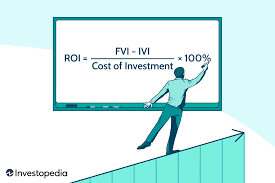
The success of an investment is most commonly evaluated using Return on Investment (ROI), a simple yet powerful metric that measures how effectively invested capital has generated profits. ROI expresses the gain or loss from an investment relative to its original cost, allowing investors to assess performance in percentage terms rather than absolute values. The formula for calculating ROI is: ROI = (Current Value of Investment − Original Value of Investment) / Original Value of Investment One of the key advantages of ROI is that it enables meaningful comparison between different types of investments, even when the amounts invested vary significantly. By converting returns into percentages, investors can objectively evaluate which investment utilized capital more efficiently. For instance, consider two different investments. In the first case, an investor puts $1,000 into a stock, and after one year its value increases to $1,100. The ROI for this stock investment is calculated as: ($1,100 − $1,000) / $1,000 = 10%In the second case, an investor purchases real estate for $150,000, and its value rises to $160,000 over the same period. The ROI for the real estate investment is: ($160,000 − $150,000) / $150,000 = 6.67%Although the real estate investment generated a much larger absolute gain of $10,000 compared to the stock’s $100 gain, the stock investment delivered a higher ROI. This indicates that, per dollar invested, the stock produced a better return than the real estate asset.
Thus, ROI highlights efficiency rather than size of profit, making it an essential tool for investors to compare opportunities, allocate capital wisely, and make informed financial decisions.
5.Digital Gold or Gold ETFs- investment
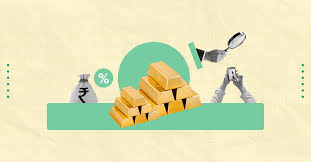
Digital Gold or Gold ETFs are the most common and new modern, convenient, and most secure ways to invest in gold without the difficulty of storing it physically. In 2025, these options have become increasingly popular among beginners seeking safe and flexible investments. You can buy small quantities of gold online and sell them anytime at real-time market prices. Gold Exchange-Traded Funds (ETFs), on the other hand, it also allow you to invest through the stock market, offering transparency and liquidity as well . Both of them are ideal for portfolio diversification and protecting wealth against inflation. However, returns depend on gold price movements and may fluctuate over time. it totally depends upon the physical rate
6.Real Estate (for Long-Term Goals) investment

Real Estate is one of the most rewarding and long-term investment options for those who can afford a higher amount of initial investment. It also offers both steady rental income and capital appreciation as property values rise over time. With the process of rapid urbanization and the rise of digital property platforms, investing in real estate has become a very large step for being transparent, secure, and accessible than ever before. Real estate also serves as a tangible asset, providing you a lot of financial stability and diversification to your portfolio as well . However, it requires much more significant capital, market research, and patience, as real estate investments are generally less liquid than other asset types. and it takes a lot of time to grow as well
Conclusion
An investment is a financial decision with a purpose and an eye toward the future that involves allocating resources today with the expectation of generating returns in the future. Throughout the discussion, a variety of investment options, such as stocks, bonds, mutual and index funds, real estate, commodities, cryptocurrency, and collectibles, draw attention to the numerous choices that investors can choose from based on their financial objectives, risk tolerance, and time horizon. A well-informed decision is essential because each investment vehicle carries its own level of risk, return potential, liquidity, and tax implications. Return on Investment (ROI), which enables investors to objectively evaluate performance and compare various assets regardless of the amount invested, is the ultimate measure of any investment’s success. Instead of focusing solely on absolute gains, ROI emphasizes efficiency by demonstrating how effectively each dollar invested generates returns. However, risk exposure, market volatility, investment duration, and diversification all play a significant role in overall investment outcomes, so ROI should not be considered in isolation. A completed investment procedure demonstrates the significance of professional guidance, financial planning, risk assessment, and research. Long-term financial growth is more likely to come to those investors who have a clear understanding of their financial situation, choose prudent diversification, and are patient. In conclusion, successful investing involves more than just maximizing returns; it also involves striking a balance between risk and reward, aligning investments with personal financial goals and ensuring economic sustainability over the long term

